

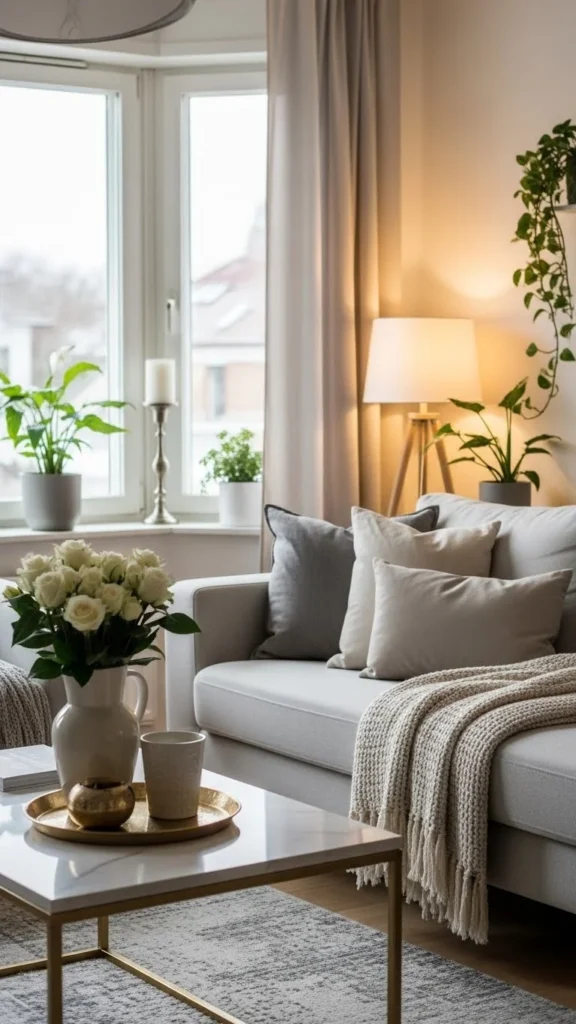
The new year often sparks a strong urge to reset home life. People search for ways to change how their space feels without large costs or major projects. Small decor updates can shape daily habits, mood, and comfort. This list focuses on simple, realistic ideas that work in apartments, houses, and shared spaces. Each idea leans on easy swaps, low-cost materials, and relaxed DIY steps. Try one or mix several. The goal is a calm, welcoming home that supports everyday living in 2025.
1. Soft Lighting Layers for Cozy Evenings

Lighting affects mood more than most decor items. Start by switching off the main ceiling light at night. Add two or three smaller lamps instead. Table lamps on side tables work well. Floor lamps help dark corners feel balanced.
You do not need new fixtures. Swap bulbs to warm white. Use lamps already stored away. Thrift stores often have solid lamp bases at low prices. String lights inside glass jars add glow on shelves or windowsills.
Place lights at different heights. One low. One mid-level. One taller. This reduces harsh shadows. Bedrooms feel calmer this way. Even screen time feels easier on the eyes. Small lighting changes can shift the whole room without much effort.
2. Decluttered Entryway with a Purpose
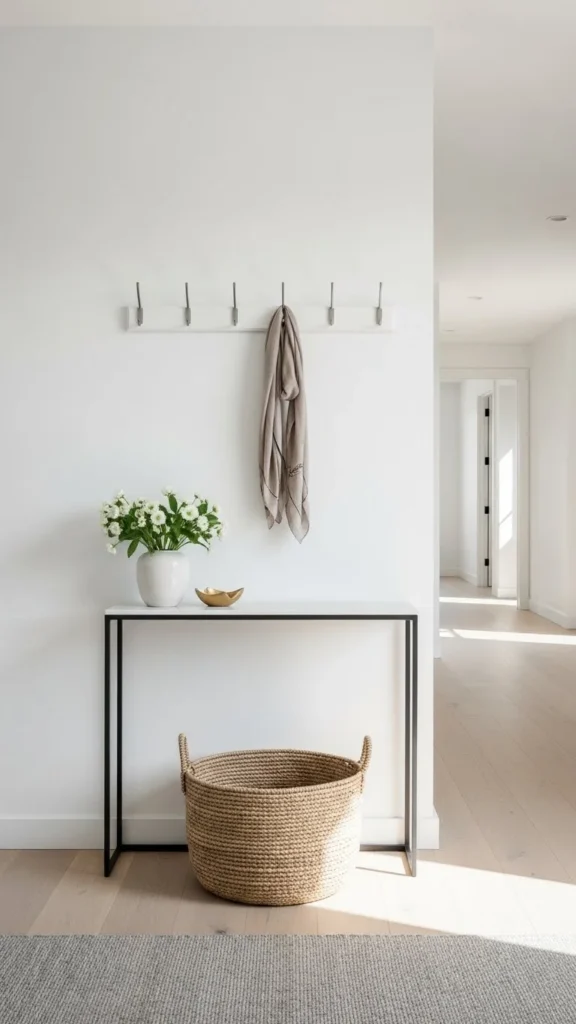
The entryway shapes first impressions every day. A cluttered one adds stress before shoes even come off. Start by removing everything that does not belong there. Only daily items should stay.
Wall hooks hold bags and jackets. A basket catches shoes. A small tray keeps keys together. If space feels tight, vertical storage helps more than bulky furniture.
You do not need a full redo. Even one basket and two hooks can change mornings. Add a washable rug to define the space and protect floors. Entryways work best when they stay simple and quick to reset each night.
3. Neutral Wall Art with Calm Shapes
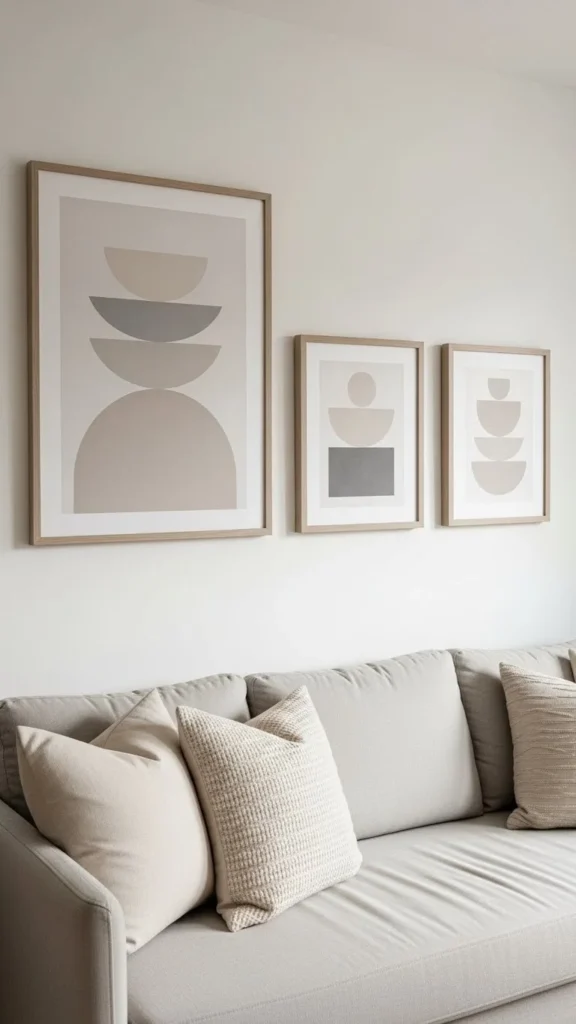
Wall art can change a room without moving furniture. Calm shapes and neutral tones suit early January moods. Soft abstracts, line drawings, or simple landscapes work well.
You do not need pricey prints. Free art downloads are easy to find online. Print them at home or at a local shop. Thrifted frames save money and add character.
Hang art at eye level. Keep spacing even. Two or three pieces often look better than many small ones. Neutral art gives rooms a quiet feel while still adding interest.
4. Indoor Plants for Everyday Life

Plants bring warmth and life to any space. They also help rooms feel cared for. Start small if you are unsure. Snake plants, pothos, and peace lilies handle low effort well.
Use simple planters. Ceramic or clay works fine. If budget is tight, reuse containers and add drainage holes. Group plants near windows for easy watering routines.
Even one plant on a shelf or table can soften hard edges. Plants pair well with neutral decor and work in every room, including bathrooms with light.
5. Simple Throw Pillow Swaps
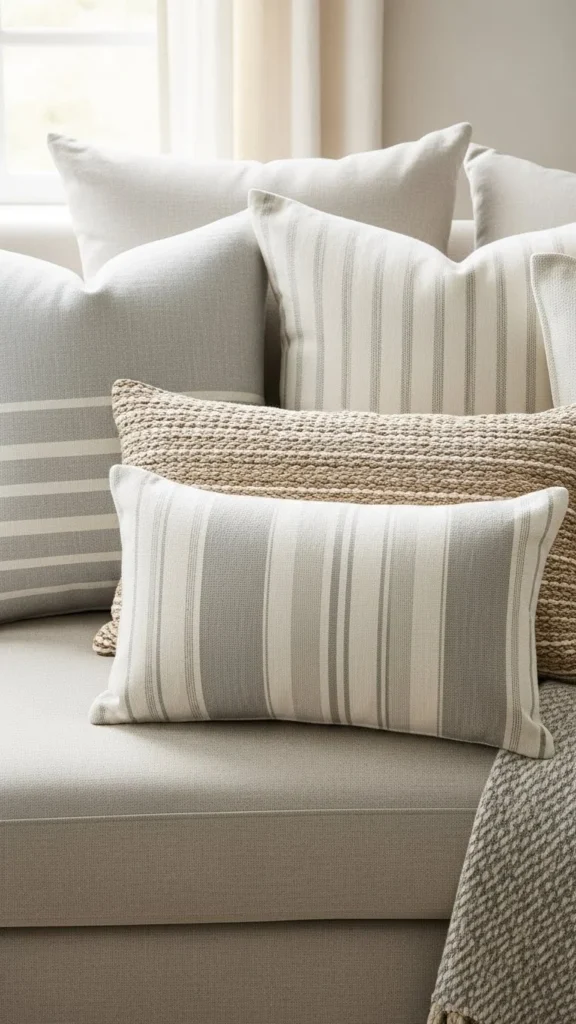
Pillows change the look of a sofa fast. Swap busy holiday designs for calm textures. Linen, cotton, or knits work well.
You do not need new inserts. Just change covers. This saves space and money. Stick to two or three colors to keep things relaxed.
Mix textures rather than patterns. One knit. One smooth. One lightly textured. This adds interest without visual noise.
6. Open Shelves with Breathing Room
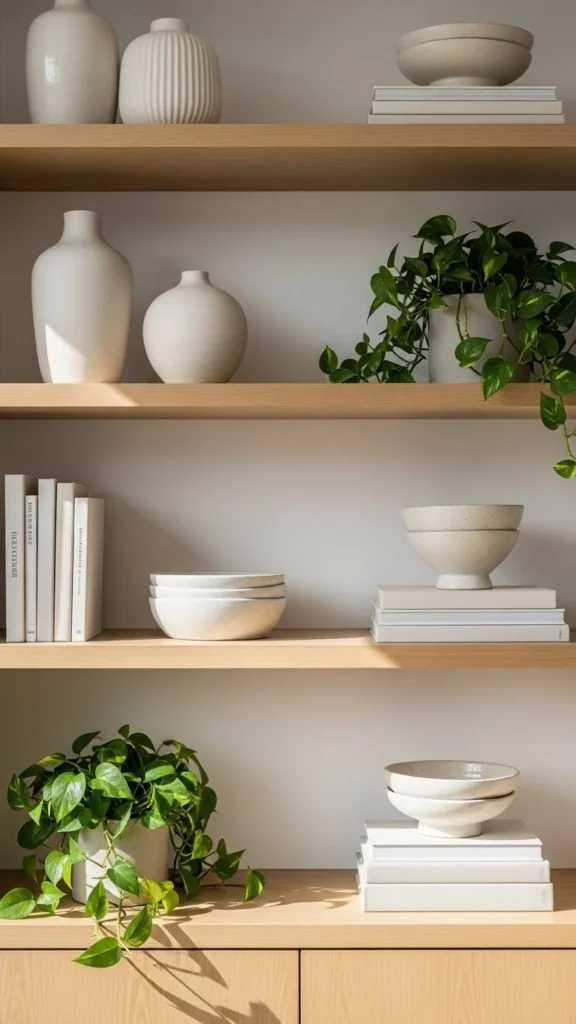
Shelves often get overcrowded over time. Clearing them resets how a room feels. Remove everything first. Add items back slowly.
Leave space between objects. Books look better stacked in small groups. Mix in one or two decorative items. Avoid filling every inch.
Use items you already own. Simple bowls, vases, or framed photos work well. Empty space helps shelves feel lighter and easier to maintain.
7. Cozy Bedroom Layers
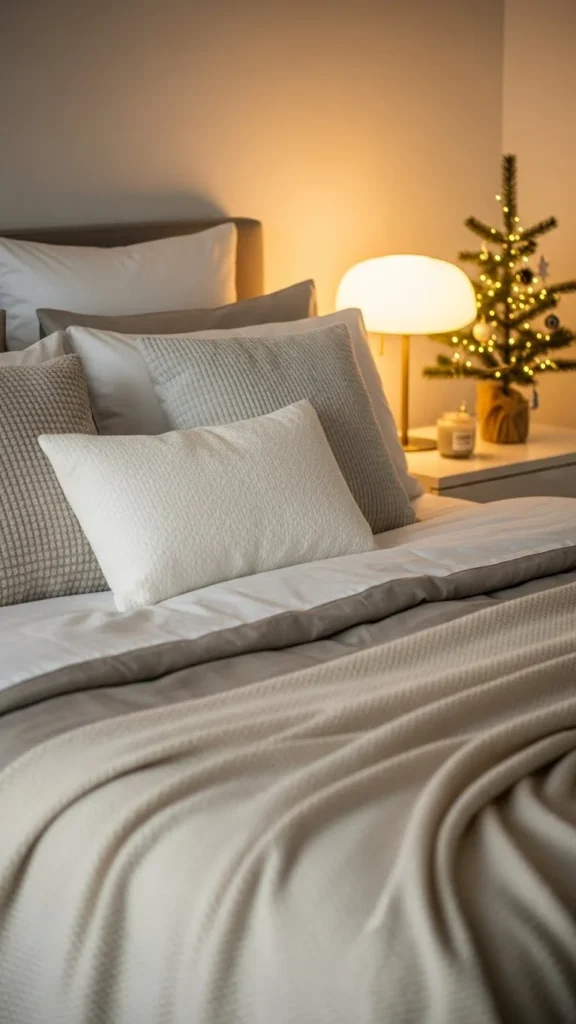
Bedrooms benefit from soft layers. Add one extra blanket at the foot of the bed. Choose cotton or fleece for comfort.
Switch pillowcases to calmer colors. Keep patterns minimal. Use a bedside lamp instead of overhead light in the evening.
These small changes make sleep routines feel gentler. No full bedding set is required. Layer what you already have.
8. Calm Color Touches in Small Areas
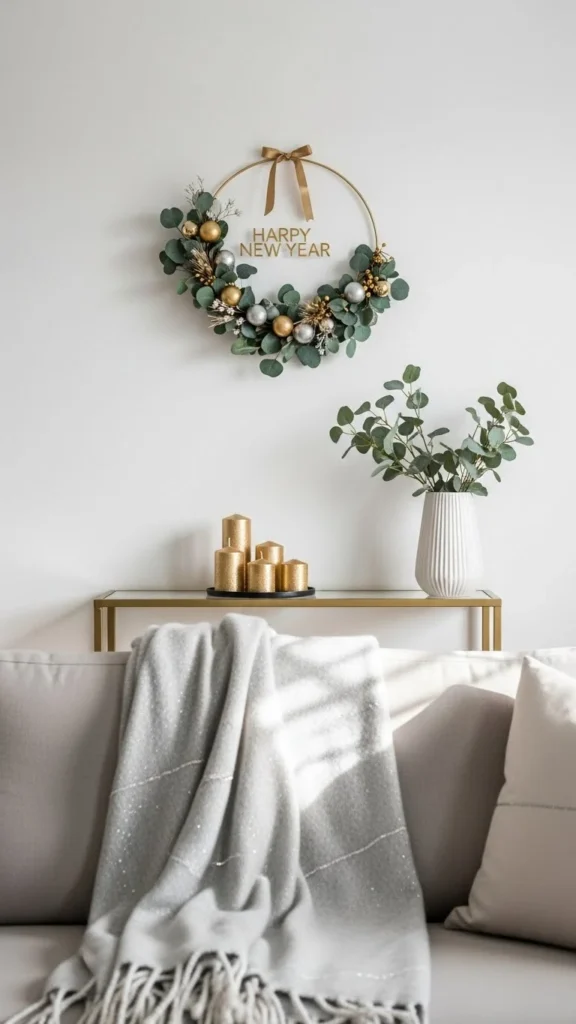
Add color in small doses. Think vases, books, or throws. Soft blues, greens, or warm browns feel steady and grounding.
Avoid repainting if budget is tight. Accessories give flexibility. If a color feels wrong later, it is easy to change.
Keeping color limited helps rooms feel calm rather than busy.
9. Coffee Table Reset
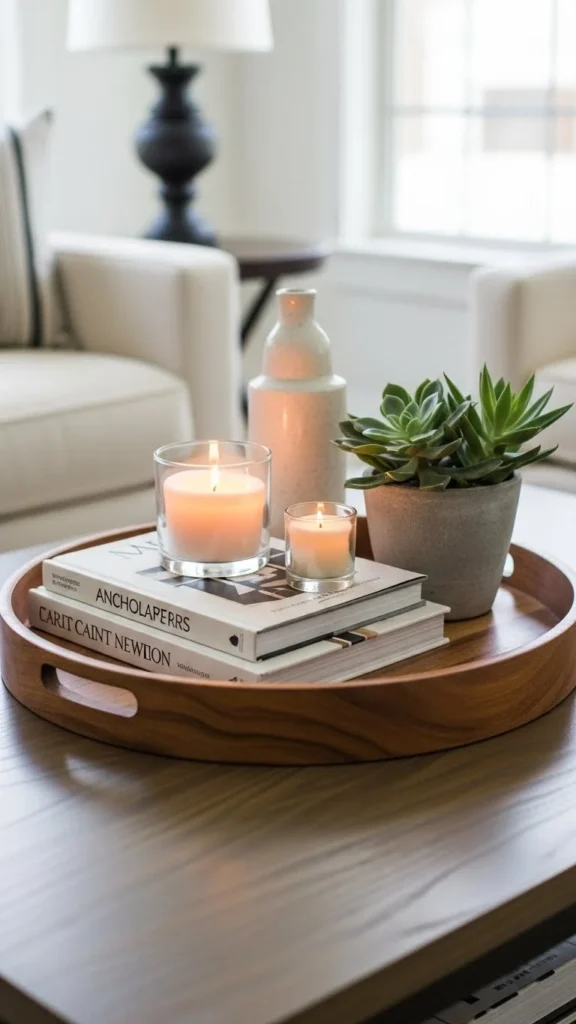
Clear your coffee table completely. Add items back with intention. A tray keeps things organized. Two books add height. One small plant adds life.
Leave space for daily use. Tables should work, not just look styled. Fewer items make cleaning easier too.
This quick reset often changes how the whole room feels.
10. Bathroom Linen Refresh
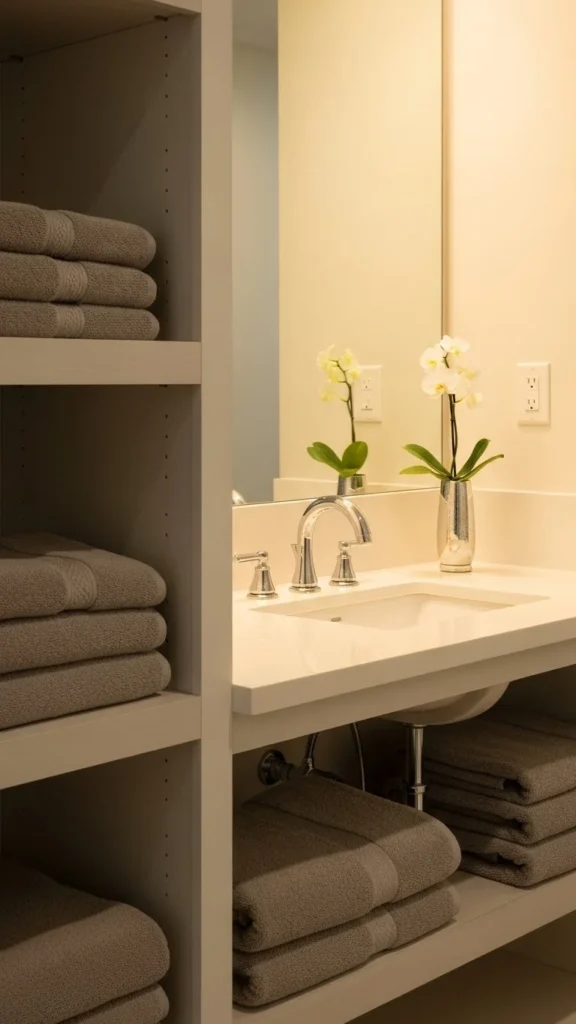
New towels are not required. Fold existing ones neatly and display only what you use. Stick to one or two colors.
Add a small basket for extras. Roll towels for a spa-like feel. This simple change makes daily routines feel calmer.
11. Quiet Corners for Reading
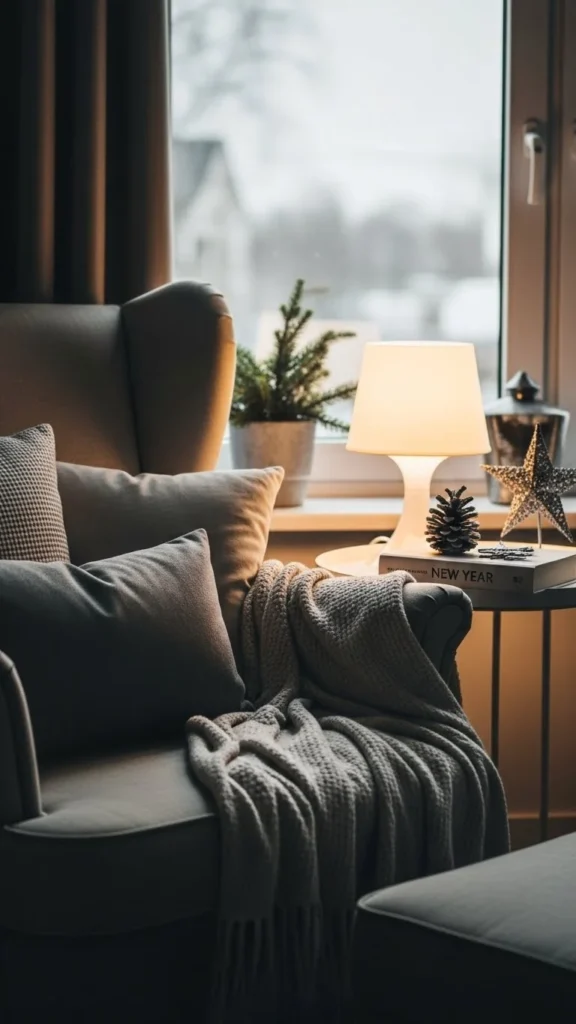
Create a small spot for reading or relaxing. One chair. One lamp. One table. That is enough.
Use what you already own. Move furniture slightly. A calm corner supports slower moments during busy days.
12. Organized Kitchen Counters
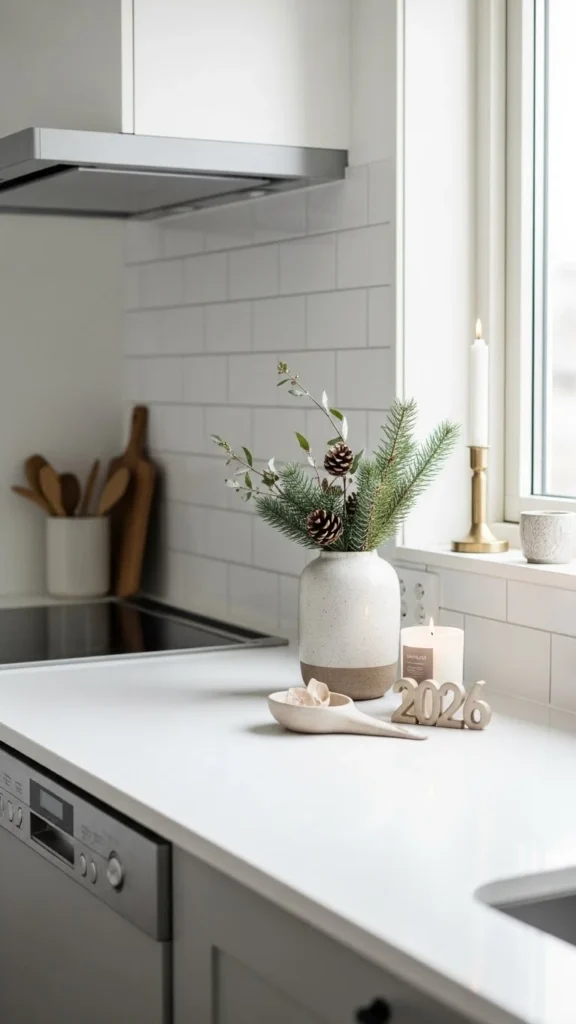
Clear counters help kitchens feel larger. Store rarely used items. Leave out only daily tools.
Group items on trays. This keeps surfaces tidy and easy to wipe. Less clutter makes cooking feel simpler.
13. Soft Window Treatments
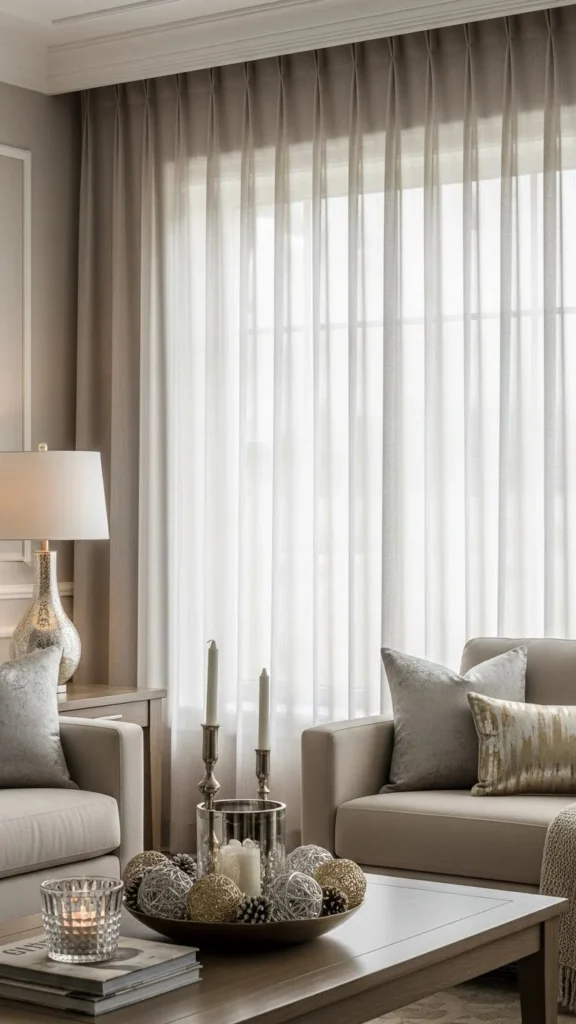
Light curtains soften rooms. Sheer or cotton options work well. They allow daylight while adding privacy.
Use tension rods if drilling is not an option. This keeps costs low and setup easy.
14. Reworked Furniture Layout

Try moving furniture before buying anything new. Shift sofas slightly. Open walkways.
Even small changes can make rooms feel new. Take time to live with the layout before deciding.
15. Minimal Desk Setup

Clear desks support focus. Remove unused items. Keep only what you use daily.
Add one plant or lamp for comfort. Simple setups feel easier to maintain.
16. Cozy Rugs for Warmth
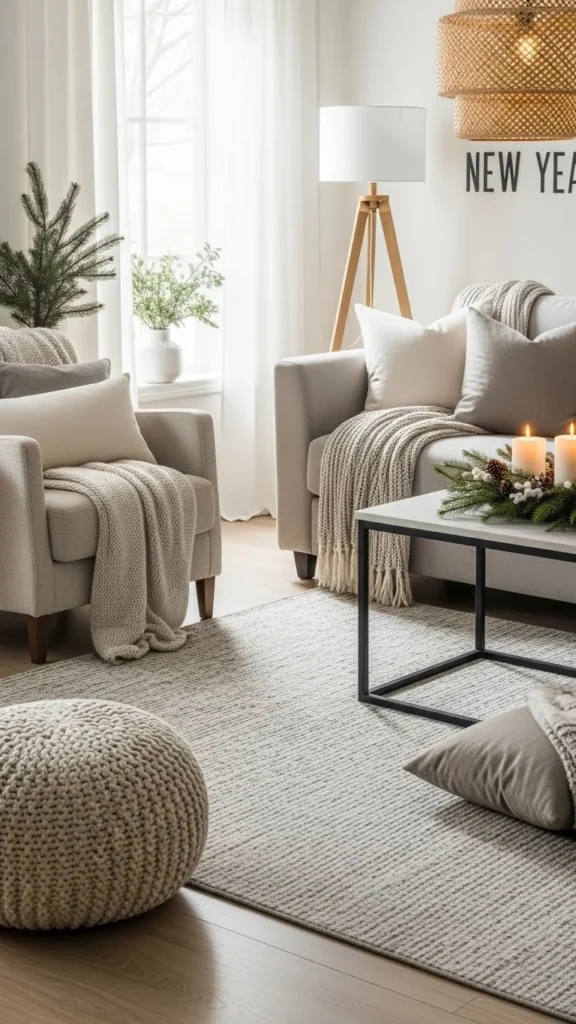
Rugs add warmth underfoot. Layer smaller rugs over existing ones if needed.
Choose washable options for ease. Rugs also help define spaces in open layouts.
17. Thoughtful Candle Displays
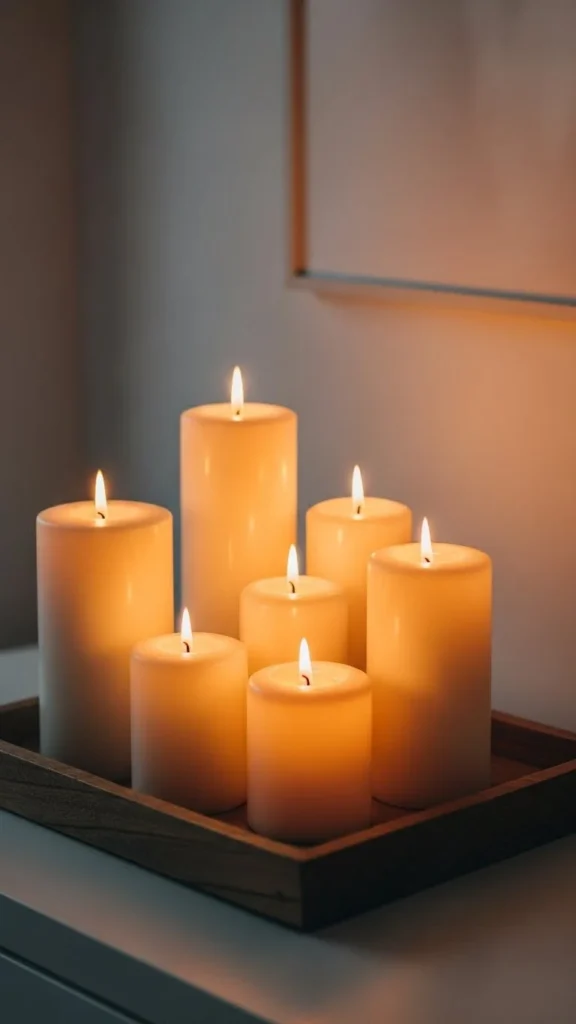
Group candles on trays or plates. Use different heights for interest.
Battery candles work well for safety. The soft glow adds comfort during evenings.
18. Personal Photo Updates

Swap older photos for recent memories. Keep frames simple.
Limit displays to avoid clutter. Personal touches help homes feel lived-in.
19. Calm Scent Choices
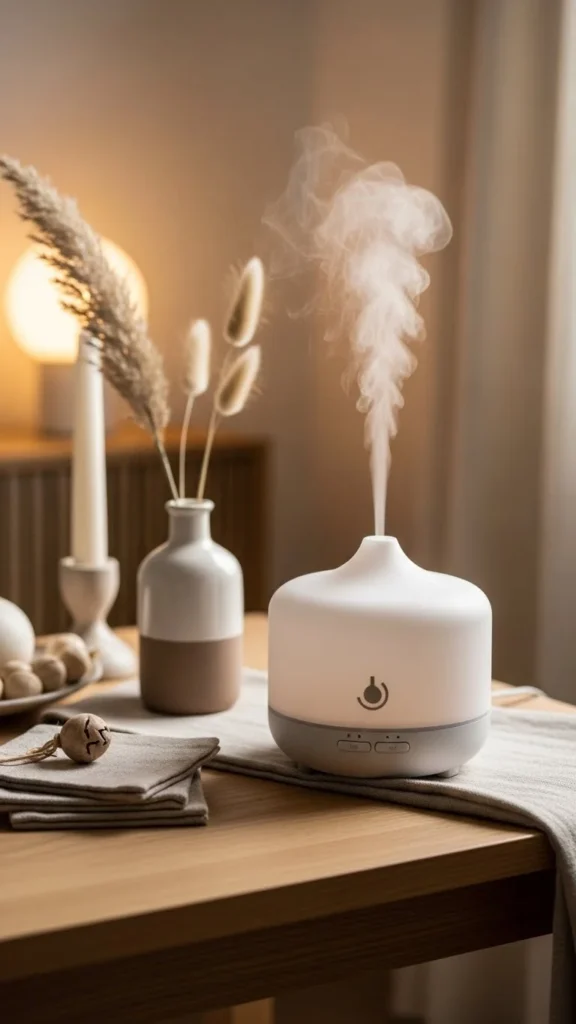
Scents shape mood quietly. Choose light options like citrus or lavender.
Diffusers, candles, or sachets work well. Keep scents subtle for shared spaces.
20. Seasonal Storage Reset
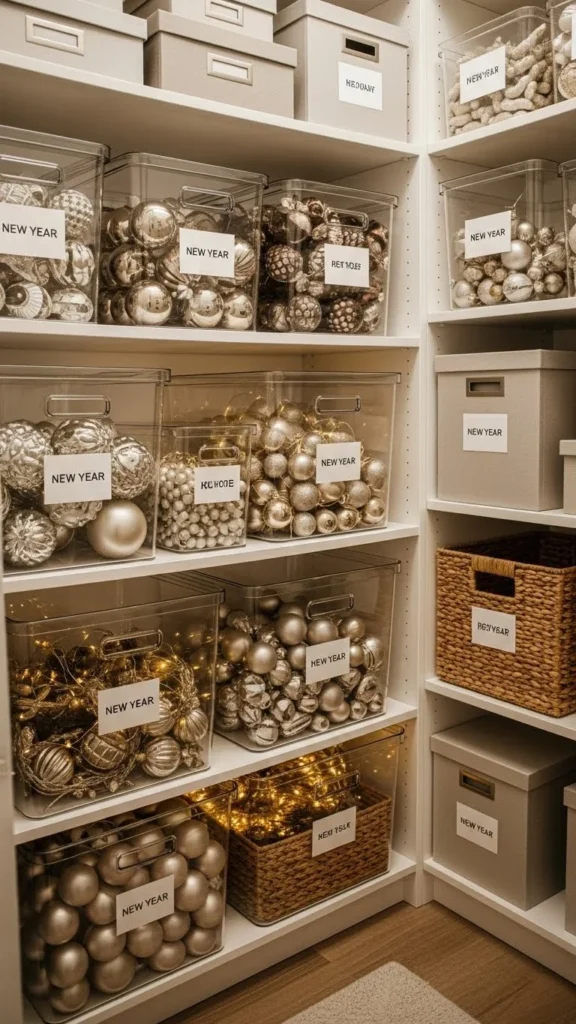
Pack away holiday items fully. Label boxes clearly.
This clears visual noise and makes space feel open again. Storage resets support mental clarity too.
21. Simple Wall Hooks for Everyday Items

Wall hooks help reduce surface clutter fast. They work well in entryways, bedrooms, and even bathrooms. Use them for bags, scarves, hats, or headphones. When items have a visible place, they stop piling up on chairs.
Hooks are affordable and easy to install. Peel-and-stick options work for rentals. Space them evenly for a clean look. Choose simple shapes in wood or matte metal to keep things calm.
This setup supports daily habits. Grab items quickly. Hang them back just as easily. One small row of hooks can replace bulky storage furniture and free floor space.
22. Tray Styling for Daily Essentials

Trays help organize small items without hiding them away. Use them on consoles, coffee tables, or dressers. Keys, glasses, remotes, and wallets all belong here.
Choose one tray per surface. Wood, ceramic, or metal works well. Keep items limited to avoid clutter. Trays create visual order and make cleaning easier.
You can repurpose serving trays you already own. Even shallow bowls work. This small step helps maintain tidiness without daily effort.
23. Chair Corners with Soft Textures
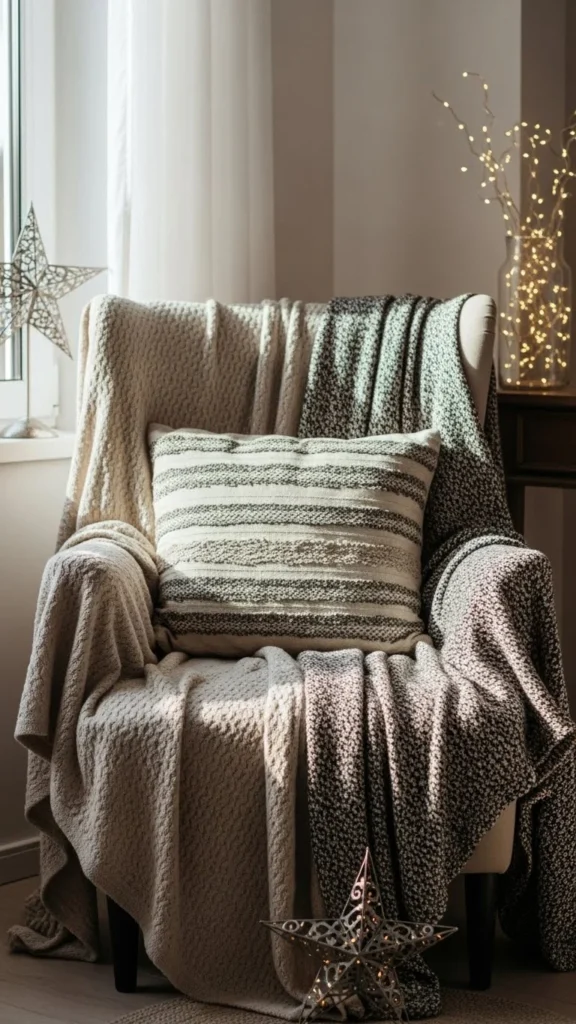
An unused chair can become a calming corner. Add a folded throw and one cushion. That is enough. This works well in bedrooms, living rooms, or near windows.
Soft textures invite short breaks. Reading. Phone scrolling. Quiet moments. You do not need matching pieces. Neutral fabrics keep the look relaxed.
This idea uses furniture you already have. It fills empty corners and adds comfort without crowding the room.
24. Clear Nightstand Reset
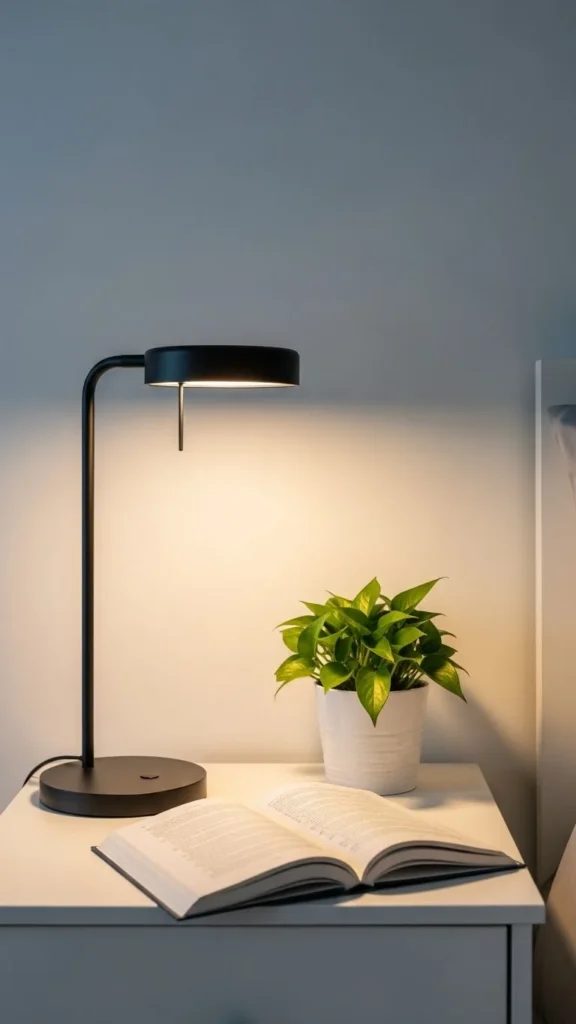
Nightstands often collect clutter. Clear everything first. Add back only three items. A lamp. A book. One personal object.
Use drawers or baskets to hide extras. This keeps the surface calm and easy to clean. Clear nightstands support better sleep routines.
This reset takes minutes but changes how bedtime feels. Less mess. Less distraction. More rest.
25. One-Room Reset Challenge
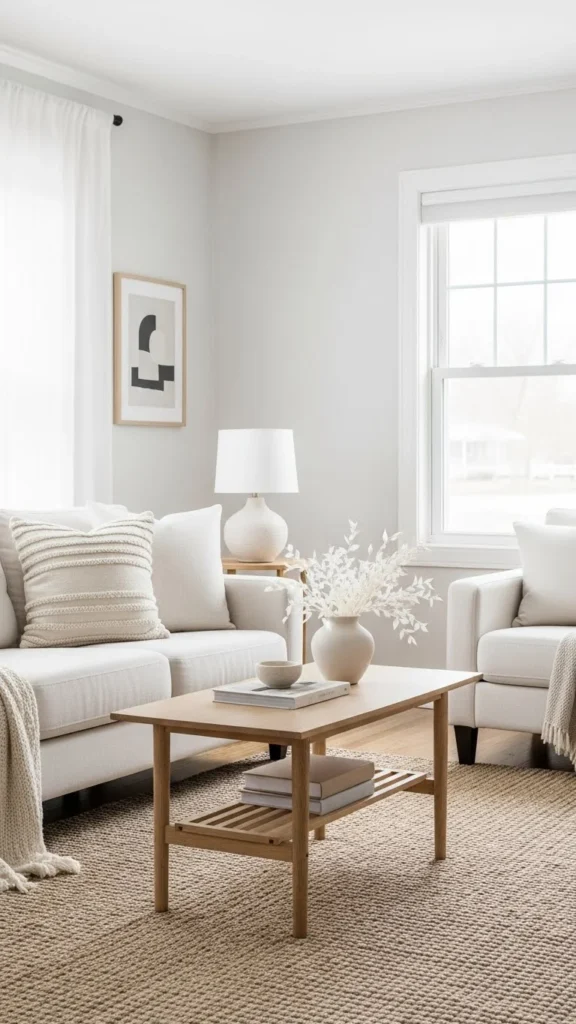
Choose one room and reset it fully. Not the whole house. Just one space. Clear surfaces. Rearrange furniture slightly. Add back only what supports daily use.
Set a time limit. One hour works well. This keeps decisions simple. Use storage bins to move items out quickly.
Finishing one room builds momentum. It feels manageable and rewarding. Small wins like this often inspire more positive changes across the home.
Conclusion
A new year does not require major spending or full renovations. Small, thoughtful decor updates can shift how a home feels day to day. Lighting, storage, texture, and layout changes often bring the biggest impact. Pick one or two ideas and start there. Simple actions add up. Over time, these small shifts create a home that feels calm, supportive, and ready for 2025.